Policy & Strategic Advisory: Kementerian Pembangunan Belia, Kemajuan Sukan dan Ekonomi Kreatif Sabah (KBSK)
Rahman Imuda currently serves as a Special Officer to the Minister at the Kementerian Pembangunan Belia, Kemajuan Sukan dan Ekonomi Kreatif Sabah, working directly under Datuk Haji Nizam bin Datuk Seri Panglima Haji Abu Bakar Titingan. The role places him within a policy and administrative environment where decisions are shaped not only by ideas, but by institutional processes, public expectations, and long-term state priorities.
Working within the Ministry provides a different dimension to his overall experience. Unlike project-based initiatives or independent platforms, this role operates within a formal structure where policy direction, programme delivery, and governance must align in a coherent and accountable manner.
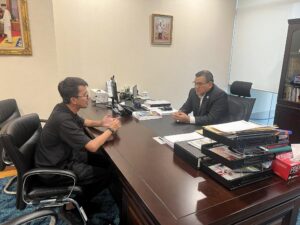
The work involves supporting strategic communication, programme coordination, and policy-related initiatives across areas such as youth development, sports advancement, and the creative economy. Each of these sectors carries its own challenges, requiring an understanding of both macro-level planning and ground-level realities.
One of the key responsibilities within this role is helping to translate policy direction into messaging that can be understood and engaged with by the public. Government communication, particularly at the state level, requires clarity without oversimplification, ensuring that initiatives are not only announced, but also understood in terms of their relevance and impact.
At the same time, the role involves exposure to how programmes are designed, implemented, and evaluated within a governmental framework. This includes working with different stakeholders, aligning priorities, and navigating administrative processes that are often more complex than they appear from the outside.
The Ministry’s focus areas, particularly youth and sports, are closely aligned with Rahman’s previous work in grassroots development. This creates a natural continuity between community-based initiatives and institutional policy, allowing insights from the ground to inform broader discussions where relevant.
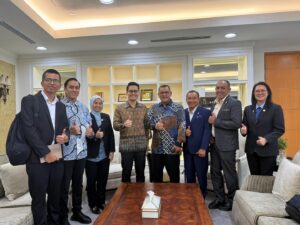
Operating within a public institution also requires a different level of discipline in communication. Messaging must be consistent, measured, and aligned with official positions, while still remaining accessible to the public. This balance is not always straightforward, especially in an environment where public scrutiny is constant.
The role also provides insight into how resource allocation, programme priorities, and policy direction are shaped within the context of state governance. Decisions are influenced by a combination of strategic objectives, available resources, and political considerations, all of which must be navigated carefully.
Beyond communication, there is also a growing emphasis on ensuring that programmes deliver tangible outcomes. This involves not just planning, but also monitoring implementation and identifying areas for improvement. In this sense, the work extends into both strategy and execution.
Being part of the Ministry has also reinforced the importance of coordination across different sectors. Youth development, sports, and the creative economy are interconnected in ways that are not always immediately visible, requiring a more integrated approach to planning and delivery.
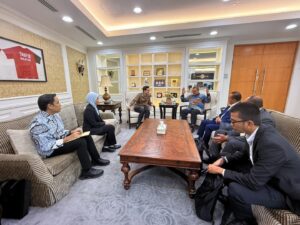
For Rahman, this role represents a shift from independent initiative to institutional engagement. It brings a different set of challenges, but also a broader platform through which ideas can be implemented at scale.
At the same time, the experience continues to be shaped by earlier work in digital strategy, media, and grassroots development. These perspectives remain relevant, particularly in ensuring that policy and programmes remain connected to the realities they are intended to address.
Ultimately, his involvement with the Ministry reflects an ongoing effort to bridge different spaces. From community to institution, from idea to implementation, and from communication to policy. It is within this intersection that much of the work continues to evolve.