Kuala Lumpur Rangers: Building Structure Beyond Grassroots Football
Kuala Lumpur Rangers FC was originally founded in 2018 by Nik Nazmi Nik Ahmad with a broader vision that went beyond football itself. The idea from the beginning was to use the sport as a platform to unite communities and create meaningful pathways for youth development, particularly for those who might not otherwise have access to structured opportunities.
The club was initially known as Setiawangsa Rangers, operating within a more localised context. Over time, as the project grew in both scope and ambition, it became clear that the identity of the club needed to evolve alongside it. In 2025, the club was rebranded as Kuala Lumpur Rangers, reflecting a shift towards a wider vision that extends beyond a single constituency to represent the broader identity of the capital.
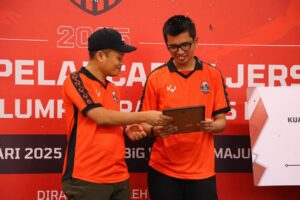
Rahman Imuda was appointed as Director in 2025, at a point where the club was transitioning into a more structured and ambitious phase. His role brought together different strands of experience, from grassroots development to strategic planning, helping to shape the club’s direction as it moved into a more competitive and organised environment.
The foundation of Kuala Lumpur Rangers lies in the belief that football can function as more than just a sport. It can act as a unifying force, bringing together individuals from different backgrounds while providing a sense of structure, belonging, and purpose. This perspective continues to influence how the club approaches both development and competition.
While many grassroots programmes focus on early engagement, KL Rangers was built to address what comes next. One of the persistent gaps in Malaysian football lies in the transition between grassroots participation and structured competition. Players often develop at the early stage, but lack clear pathways to progress further. The club was designed to respond to that gap in a more systematic way.
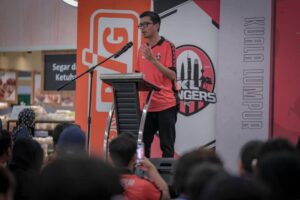
Based in the Klang Valley, Kuala Lumpur Rangers operates within a more competitive football ecosystem, which brings with it a different set of expectations. Participation in organised leagues requires not just technical preparation, but also strong administrative systems, financial planning, and long-term vision.
The club’s involvement in competitions such as the A2 Amateur League reflects its intention to operate within a structured framework. Competing at this level exposes players to higher standards of play, while also pushing the organisation to develop the necessary systems required to sustain a football club.
At the same time, KL Rangers maintains a strong connection to its developmental roots. From grassroots academies to structured training environments, the focus remains on nurturing local talent and creating opportunities for progression. The objective is not only to compete, but to build a continuous pathway that players can move through over time.
The idea of the club as a “family” is not just a slogan, but something that has shaped its culture. Relationships between players, coaches, and management are treated as an important part of development. This creates an environment where individuals are supported not only in performance, but also in personal growth.
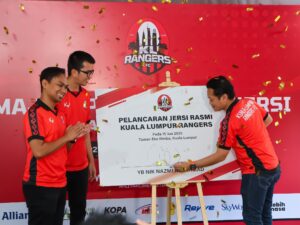
Beyond football, the club has also explored ways to integrate social impact into its activities. Initiatives that combine sport with education and community engagement reflect a broader understanding that youth development cannot be approached in isolation.
Running a club at this level, however, comes with its own set of challenges. Financial sustainability, logistical coordination, and maintaining competitive standards require continuous effort. Growth tends to be incremental, shaped by available resources and strategic priorities.
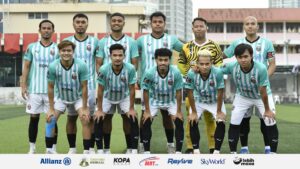
For Rahman, Kuala Lumpur Rangers represents a convergence of different experiences. It brings together grassroots development, organisational management, and long-term strategic thinking into a single platform. The lessons learned across these areas are applied within a more structured and demanding environment.
Ultimately, Kuala Lumpur Rangers is not just about building a team for competition. It is about building a system that allows players to grow, communities to connect, and a sustainable football ecosystem to take shape over time.
In that sense, football becomes more than a game. It becomes a platform to inspire, to organise, and to create a lasting impact that extends beyond the pitch.