TawauKini Football Academy: Grassroots Development Through Football
TawauKini Football Academy was established as an extension of a deeper concern that went beyond football itself. While the media platform focused on information and awareness, it became increasingly clear that there was also a need for direct engagement at the community level, particularly among young people.
The academy was created to provide a structured environment for youth development through football, but from the beginning, it was never intended to focus purely on producing players. The idea was to use football as a medium to build discipline, consistency, and a sense of direction among young participants, many of whom come from backgrounds with limited access to structured opportunities.
In places like Tawau, access to organised sports development can be uneven. While talent is not lacking, pathways often are. This creates a situation where many young players fall through the cracks, not because of a lack of ability, but because of a lack of structure and support. The academy was designed to respond to that gap in a practical way.
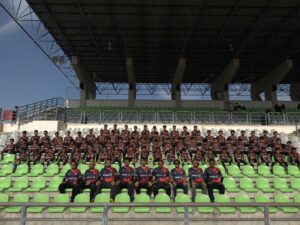
Training sessions were conducted regularly, providing not just technical exposure, but also a routine that many participants could rely on. For some, simply having a consistent place to go, with clear expectations and guidance, made a significant difference in how they approached both sport and daily life.
Over time, it became evident that football alone was not enough. Many of the players were also facing challenges in school, particularly in basic subjects. This led to a broader reflection on how development should be approached. If the goal was to build better individuals, then academic support could not be ignored.
This realisation eventually contributed to the development of more integrated approaches, including initiatives like Program Celik, where football and education were brought together in a more structured way. In that sense, the academy became more than just a training ground. It became a starting point for wider intervention.
The environment within the academy emphasised more than performance. Discipline, teamwork, and responsibility were treated as equally important as technical ability. These values were reinforced consistently, both on and off the field, creating a space where players could develop holistically.
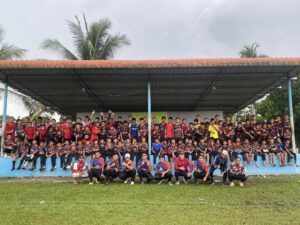
Coaching within the academy was also shaped by a more adaptive approach. Rather than relying strictly on formal methods, there was a strong emphasis on learning through interaction, observation, and experience. Players were not just recipients of instruction, but active participants in the learning process.
Parental engagement, while informal, also played a role in sustaining the academy. Support from families helped reinforce consistency, particularly for younger participants who required encouragement beyond the training environment.
As the academy grew, it began to attract a wider range of participants across different age groups. This created a more dynamic environment, where younger players could learn from older ones, and a sense of progression became more visible within the group.
Running a grassroots academy, however, comes with ongoing challenges. Limited resources, logistical constraints, and the need to balance different expectations are part of the reality. Yet, these constraints also shaped the way the academy operated, encouraging a more flexible and resourceful approach.
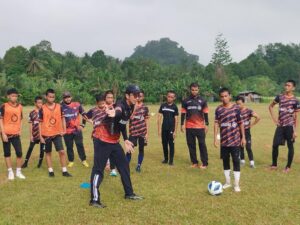
The experience highlighted an important point. Development at the grassroots level is rarely linear. Progress is uneven, and success cannot always be measured in conventional terms. What matters more is consistency, exposure, and the gradual building of confidence.
For Rahman, the academy became a practical space to apply ideas about learning, development, and mentorship. It provided direct insight into how young people respond to structure, guidance, and opportunity, something that cannot be fully understood from a distance.
Ultimately, TawauKini Football Academy represents a long-term commitment rather than a short-term project. It is built on the belief that meaningful development begins with access, continues with consistency, and grows through trust.