Program Celik is a grassroots intervention initiative developed to address a long-standing challenge within underserved communities, particularly the gap in foundational literacy, numeracy, and consistent school engagement among primary school children. Initiated and led by Rahman Imuda, the programme reflects a practical attempt to rethink how education interventions can be designed to respond more closely to the lived realities of B40 communities.
The programme is supported by Yayasan Hasanah, whose backing has enabled the initiative to move beyond a small-scale pilot into a more structured and measurable intervention. This support has been critical in strengthening both the delivery model and the monitoring framework, ensuring that the programme remains outcome-driven while still being responsive to the needs of the community.
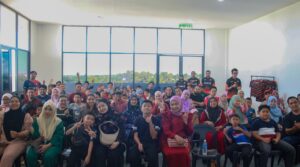
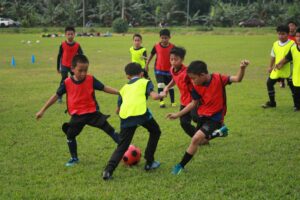
At its core, Program Celik integrates academic support with structured football training, creating a hybrid model that uses sport not as an add-on, but as a central engagement mechanism. Instead of separating education and extracurricular activity, the programme positions football as a consistent entry point that draws children in and sustains their participation over time.
The initiative focuses on children aged between 8 and 12, many of whom come from economically disadvantaged households and demonstrate low academic performance, often within TP2 and TP3 levels or equivalent to D and E grades in Bahasa Malaysia and Mathematics. These are students who are at risk of falling further behind if conventional approaches remain unchanged.
From the outset, Program Celik was designed with clear structure and accountability. The programme includes targeted student recruitment from multiple primary schools, the delivery of regular after-school academic classes, and consistent football training sessions. Each component is intentionally aligned to reinforce the broader goal of improving both educational outcomes and personal development.
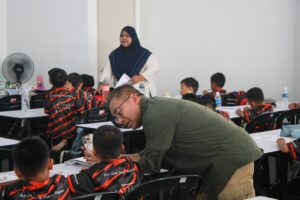
The academic component concentrates on Bahasa Malaysia and Mathematics, recognising their importance as core subjects that influence a student’s overall progression in school. Classes are conducted in smaller groups, allowing facilitators to adapt their teaching approach based on individual learning gaps and pace. This flexibility is essential in a context where students come with varied levels of understanding and confidence.
Alongside this, football training sessions are conducted in a structured manner, focusing not only on skill development but also on instilling discipline, teamwork, and routine. For many participants, these sessions provide a stable environment that reinforces positive behavioural patterns, which can gradually translate into their approach towards learning.
One of the key strengths of Program Celik lies in its ability to improve attendance and engagement. The presence of football as a central component naturally increases student interest and commitment. Over time, this engagement extends beyond the field and into the classroom, where students begin to show greater consistency in attending academic sessions.
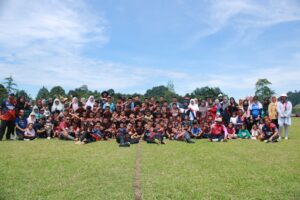
Parental involvement is also integrated into the programme through structured engagement sessions. These sessions ensure that parents are aware of their children’s progress while also encouraging them to play a more active role in supporting learning at home. This approach recognises that sustainable improvement requires alignment between the programme and the family environment.
The implementation of Program Celik is supported by a clear monitoring and evaluation framework. Progress is tracked through indicators such as attendance rates, academic performance, and football skill development. This allows the programme to remain accountable while also providing insights that inform ongoing improvements.
Throughout its implementation, the programme has evolved based on field experience. Early observations highlighted important social dynamics, including issues of confidence and peer interaction among participants. These insights informed refinements in participant grouping and delivery approach, contributing to a more cohesive learning environment.
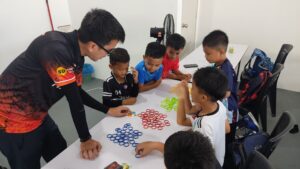
In terms of reach, Program Celik has successfully engaged a significant number of students across different age groups, maintaining consistent participation over several months. The ability to sustain engagement within this demographic is a key indicator of the programme’s relevance and effectiveness.
Beyond its immediate outcomes, Program Celik represents a broader approach to social intervention. It challenges the assumption that academic improvement can be achieved solely through conventional classroom methods, instead demonstrating the importance of motivation, structure, and context in shaping learning outcomes.
The programme continues to position itself for further growth, with ongoing efforts to strengthen partnerships, secure sustainable funding, and refine its delivery model. There is also an increasing focus on developing a framework that can be adapted and replicated in other communities facing similar challenges.
Ultimately, Program Celik is not just about improving grades or developing football skills. It is about creating meaningful pathways for children who might otherwise be overlooked, providing them with structure, confidence, and a stronger foundation for the future.